
At TeamLike Schulbegleitung, we care not only about the individual development of children and young people – we also want our employees to feel safe, supported, and empowered. A key pillar of this is supervision. It is an integral part of our work and a significant instrument for quality assurance and further development.
What is Supervision anyway?
For us, supervision means: pausing, looking closely, understanding. It is a structured, professional dialogue in which we look at our work together – without judging, but with the goal of reflecting, learning from one another, and developing further.
It is not about finding mistakes, but about questioning one’s own practice, analyzing difficult situations, and developing constructive solutions. Supervision helps to better handle stressful moments and strengthens self-confidence in everyday professional life.
Our Basic Rules in Supervision
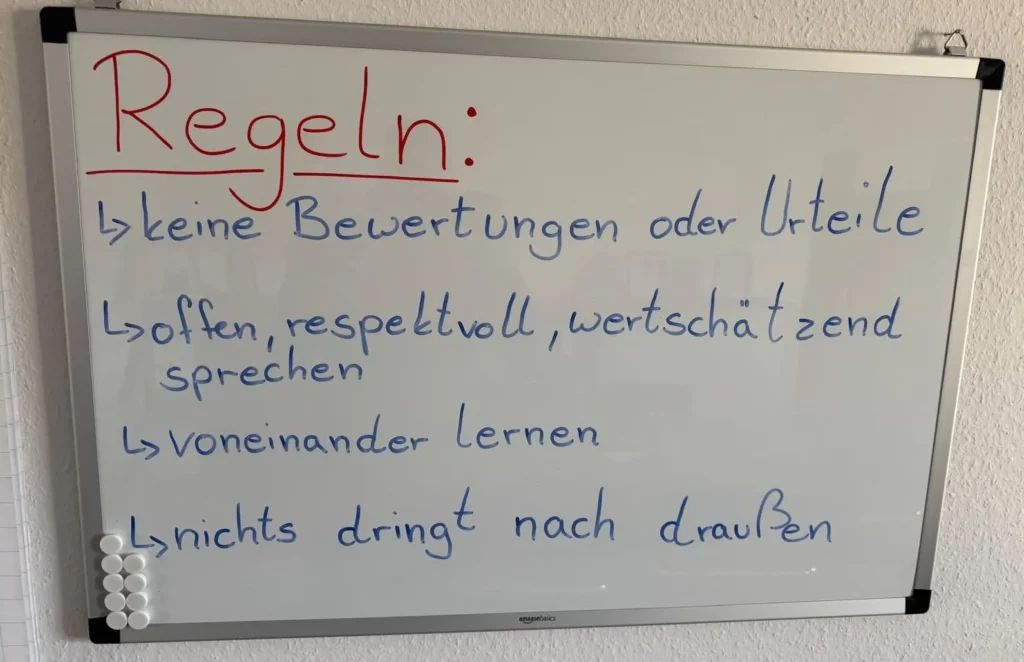
To ensure a safe space for honest exchange, we have clear rules in place:
- No evaluations or judgments
- Speak openly, respectfully, and with appreciation
- Learning from each other
- What is discussed in supervision stays in the room
These principles create an atmosphere of trust in which every voice counts and personal experiences can be shared.
Why Supervision is so important to us
Working in school support brings many beautiful but also challenging moments: emotional stress, unclear roles, communication with multiple parties, and behavioral peculiarities of the children. All of this can leave a mark – and this is exactly where supervision comes in.
Our Goals:
- Reflecting on professional practice
- Strengthening cooperation with teachers, parents, and specialist agencies
- Recognizing and counteracting burnout at an early stage
- Promoting the personal and professional development of our employees
How a supervision session works with us
1. Introduction
We start with a greeting, clarify the participants’ expectations, and jointly determine the main topics of the session. These can include case discussions, communication difficulties, or organizational questions.
2. Main Part
The focus is on real situations from everyday work:
- Case discussion: e.g., handling a crisis or challenging behavior.
- Reflection: What role do I take on? What challenges me?
- Peer exchange: What has helped others in similar situations?
- Training units: e.g., on communication, role clarity, or conflict resolution.
3. Conclusion
Finally, the results are summarized, concrete goals are recorded, and a feedback round is conducted.
Diversity of Content
Our supervision sessions are as diverse as our everyday life in school support:
- Technical: e.g., handling aids or crisis intervention
- Communicative: e.g., exchange with teachers and parents, clarification of roles
- Personal: e.g., dealing with stress, self-care
- Organizational: e.g., documentation, participation in individual education plan (IEP) meetings
Our Conclusion: Supervision is more than just a meeting
It is a place for listening, understanding, and growing together. At TeamLike, we are convinced: those who reflect well on themselves can better support others. That is why we consciously invest time and space in supervision – for the well-being of our school assistants and ultimately the children we are privileged to support.